How U.S. Citizens Legally Marry in Thailand
A beach ceremony in Thailand is the easy part. A marriage the State Department, and your home state, recognizes takes five deliberate steps in Bangkok. Here is the paper trail, in order, with the fees and the offices.
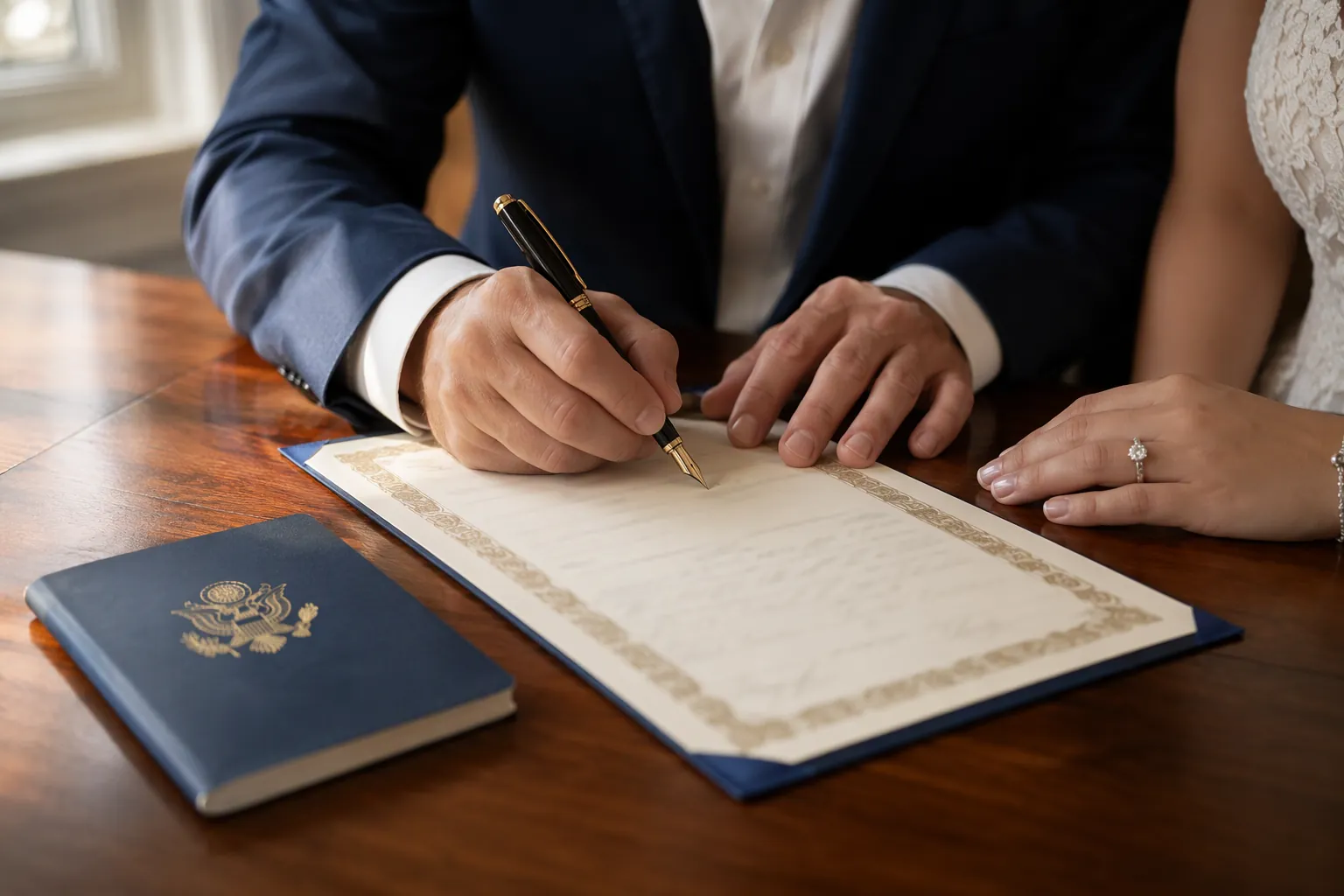
Start with the distinction that saves couples the most heartache: a wedding ceremony in Thailand and a legal marriage in Thailand are two different events. The ceremony on the beach (the arch, the flowers, the sunset) has no legal force whatsoever. What makes you married, in the eyes of Thailand and of the United States, is registering the marriage at a Thai district office, called an Amphur (written Amphoe). Everything else here exists to get you to that desk.
One more thing up front: the U.S. Embassy in Bangkok and the U.S. Consulate General in Chiang Mai cannot perform marriages. No embassy can. What they can do, and what you will need from them, is a single notarized document. The good news: the whole process is well worn, and thousands of Americans complete it every year in about two to three working days.
Before you book anything
Requirements vary slightly between district offices, so the official first step is unglamorous but real: contact the Amphur where you plan to register (or have your planner do it) and confirm their current document list. Most offices ask for the same basic set, but translations, witnesses and appointment rules differ. If you are marrying at a resort, the resort's coordinator often knows the local Amphur's preferences intimately. Ask before you fly.
The five steps, in order
- Step 01 · Before you fly / on arrivalConfirm requirements with your Amphur
Each district office sets its own checklist. Confirm if they require a certified copy of your passport, how many witnesses they want, and if you need an appointment.
- Step 02 · Day 1, morningSwear the affidavit at the U.S. Embassy or Consulate
Complete an affidavit stating you are free to marry (single, or that prior marriages legally ended), and have it notarized at the U.S. Embassy in Bangkok or the Consulate General in Chiang Mai. The fee is $50, and if the Amphur requires a certified copy of your passport, that is another $50. This is by appointment only: there are no walk ins, so book the slot before you leave the U.S.
- Step 03 · Day 1–2Get a certified Thai translation
The notarized affidavit (and passport copy, if required) must be translated into Thai by a professional translation service. Bangkok has dozens of shops that specialize in exactly this document; your hotel or planner will have a reliable one.
- Step 04 · Day 2Legalize the documents at the Ministry of Foreign Affairs
Take the affidavit, the translation and your passport to the MFA Legalization Division, 123 Chaeng Wattana Road, 3rd floor, Bangkok, open 08:30–14:30 on weekdays, or to the MFA office in Chiang Mai if you are registering in the north. They authenticate the documents for use by the district office.
- Step 05 · Day 3Register the marriage at the Amphur
Appear in person with your passports, the originals and the legalized translations, plus documentary proof that any prior marriages ended (divorce decree or death certificate). If either of you is under 20, parental consent is required. Unless you are fluent in Thai, bring an interpreter. The registrar records the marriage and issues the Thai marriage certificate. That certificate is the marriage.
Field notes, documents checklist
- Valid U.S. passports (both partners), plus certified copies if your Amphur requires them
- Embassy appointment confirmation: booked before departure; no walk ins accepted
- Divorce decree or former spouse's death certificate, if previously married (originals, and get them translated too)
- $50 notarial fee per person, in cash or card as the embassy specifies; +$50 if a certified passport copy is needed
- An interpreter for the Amphur visit unless you speak Thai: some offices can suggest one
The offices, at a glance
| Office | What happens there | Cost | Know before you go |
|---|---|---|---|
| U.S. Embassy Bangkok | Notarized marriage affidavit | $50 (+$50 certified passport copy) | Appointment only, no walk ins; book weeks ahead in high season |
| U.S. Consulate General Chiang Mai | Same notarial service for northern registrations | $50 | Appointment only; smaller operation, fewer slots |
| MFA Legalization, Bangkok | Authenticates affidavit + translation | Modest per document fee | 123 Chaeng Wattana Rd, 3rd floor; 08:30–14:30, weekdays only |
| District office (Amphur) | Legal marriage registration + certificate | Varies by district | Requirements differ; confirm checklist in advance; bring interpreter |
Will your U.S. state recognize it?
In general, yes: most U.S. states recognize marriages that were legally performed and valid under the law of the country where they took place. A marriage registered at an Amphur, following the process above, is a legal Thai marriage, and is treated to match. Recognition rules are set state by state, so for anything consequential, immigration filings, name changes, estate questions, confirm with your state's Attorney General's office or an attorney. You do not normally need to "re register" the marriage in the U.S.; you use the Thai certificate (with an English translation) as your proof.
One practical tip: order a few certified copies of the Thai marriage certificate and have an English translation made while you are still in Bangkok. Doing it later, from home, is slower and harder.
Three things couples get wrong
First, assuming the resort ceremony is the legal marriage. It is not. Plenty of couples choose a symbolic ceremony and marry quietly at a courthouse back home, which is a perfectly good plan as long as it's a deliberate one.
Second, arriving without the embassy appointment: with no walk ins accepted, a missed slot can cost you the whole trip's paperwork window. Third, underestimating the calendar: budget two to three working days in Bangkok before you fly to the islands.
Since 2025, the same process applies to same sex couples: Thailand's marriage equality law took effect in January 2025, making it the first country in Southeast Asia to recognize same sex marriage.
The beach gives you the photographs. The Amphur gives you the marriage. Plan for both desks.Juniper · Field Notes №01
Frequently asked questions
Generally yes. Most U.S. states recognize marriages that are valid under the law of the country where they were performed, and a marriage registered at a Thai Amphur district office is a legal Thai marriage. Because recognition is determined state by state, confirm with your state Attorney General's office for anything consequential such as immigration or estate counts.
No. U.S. embassies and consulates do not perform marriages. The embassy's only role is notarizing your affidavit of freedom to marry. The legal marriage itself happens at a Thai district office (Amphur).
Plan for two to three working days: the notarized affidavit on day one, translation and Ministry of Foreign Affairs legalization on day two, and Amphur registration on day three. Weekends and Thai public holidays don't count, so check the holiday calendar before booking flights.
The main U.S. fee is $50 for the notarized affidavit per person, plus $50 if your district office requires a certified passport copy. Add translation fees, MFA legalization fees and a small district registration fee. Most couples complete the entire paper trail for a few hundred dollars.
Yes. Thailand's marriage equality law took effect in January 2025, making it the first Southeast Asian country to legalize same sex marriage. The registration process at the Amphur is the same.
Sources & Further Reading
- [1]U.S. Embassy & Consulate in Thailand, Marriage in Thailand: The official step by step procedure, fees and office addresses for U.S. citizens.
- [2]U.S. Department of State, Marriage Abroad: How the U.S. treats foreign marriages and what documents to bring home.
- [3]Thai Ministry of Foreign Affairs: Legalization Division: Document legalization procedures and office locations in Bangkok and Chiang Mai.