Destination Wedding Welcome Bags: What to Pack, What to Skip
Your guests just flew eight thousand miles. The welcome bag is the first thing the wedding says to them, and the easiest place to waste money on things that never leave the hotel room.
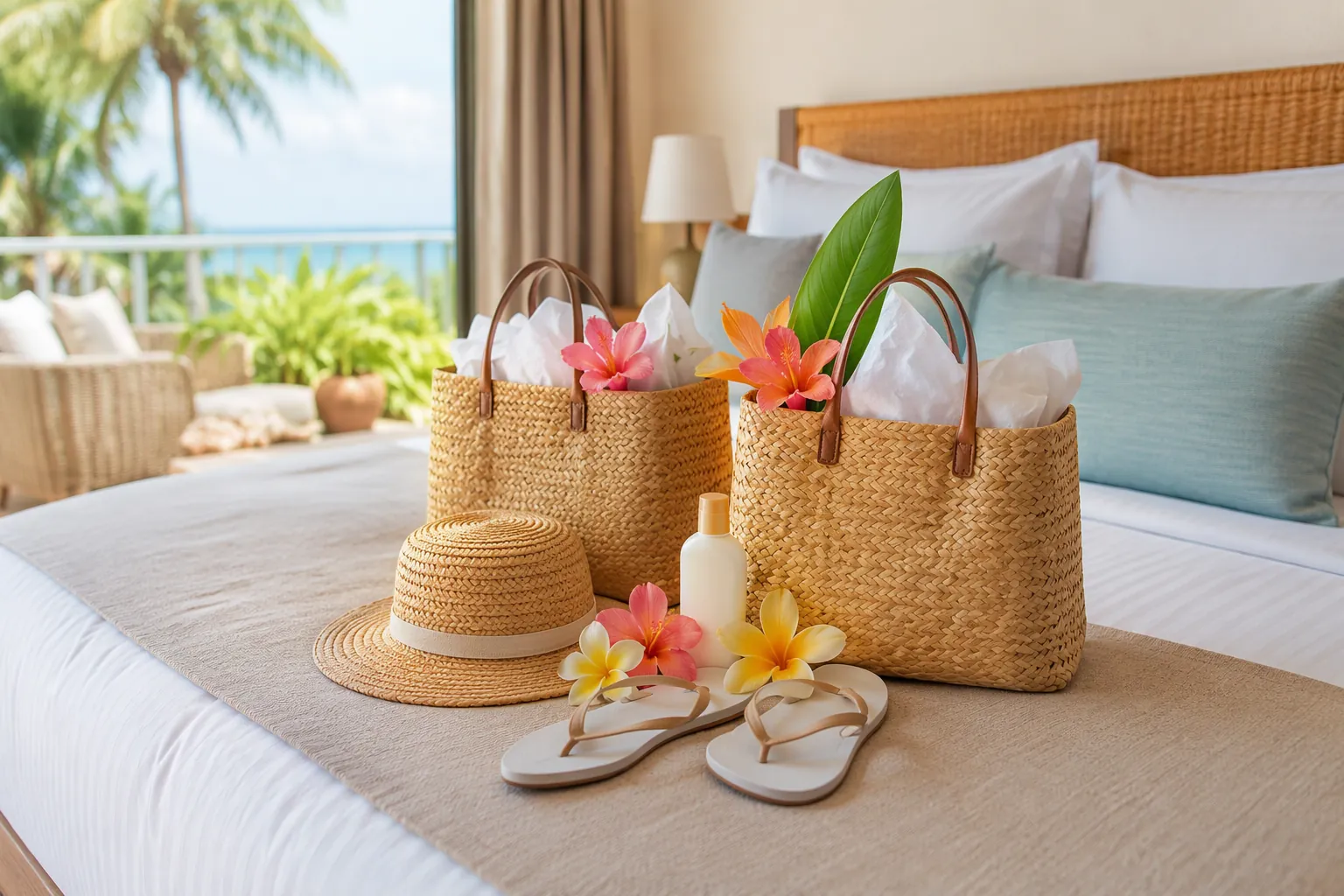
Your guests have just spent $1,500 and eighteen hours getting to you. The welcome bag waiting in their room is the wedding's first sentence, and it sets the tone for everything after. Done well it's a $20 gesture that gets photographed more than the centerpieces. Done badly it's a tote full of things that fly home unopened. Here is the difference.
The budget: per room, not per person
Welcome bags run $10–100 each, and the sweet spot for most weddings is $15–25 per room: one bag per hotel room, not per guest. For a 50-guest wedding that's roughly 25 rooms: a total line item of $400–600, and honestly one of the highest ROI spends in the entire budget. Above $40 a bag you're competing with your own welcome dinner; below $10 it's hard to fill with anything that doesn't feel like a conference giveaway.
What goes in
The contents that consistently get used, roughly in order of gratitude received:
- The welcome letter + itinerary: the one item that counts most: event times with addresses, dress codes, your planner's WhatsApp number, and a map. This is what guests keep on the dresser.
- Water: two bottles, always. Jet lagged guests are dehydrated guests.
- Local snacks: things they can't get at home: Thai coconut chips, mango sticky rice candy, regional coffee. Edible souvenirs beat objects.
- The hangover kit: electrolyte packets, pain reliever (check local rules), eye mask. Label it with humor; it's the most photographed item in any bag.
- Sun armor for the tropics: SPF lip balm, aloe gel, a paper fan. Useful from hour one.
- Flip flops or sandals: for beach ceremonies; size runs can be pre collected via your wedding website RSVP form.
- Luggage tags or a small local handmade gift: one keepsake maximum; nobody needs three.
- Kids' kits if children attend: coloring kit, small toy; buys parents a peaceful dinner.
Field notes: the customs and cargo traps
- Buy liquids at the destination. You cannot fly with a suitcase of mini liquor bottles: buy spirits, mixers and wine locally after you land. Your planner or resort can source them.
- Check the duty free allowance both ways: what you bring in and what guests carry home. Keep every receipt.
- Ship ahead if you must. Mailing non perishables to the resort 2–3 weeks early beats a third checked bag: confirm the hotel will receive and store boxes.
- Skip anything breakable, meltable (chocolate in Phuket is soup), scented near food, or branded so hard it feels corporate.
Who pays, and when it lands
The couple pays: welcome bags sit firmly in the host column of the etiquette ledger. Assembly: if you're using a planner, this is exactly the kind of task their team exists for (expect a modest assembly fee); DIY couples recruit the wedding party the day after arrival, which doubles as a decompression hour. Delivery is almost always handled by the hotel, bags are placed in rooms before check in or handed out at the front desk. Confirm the per room drop fee, if any, when you book the block.
The honorable alternatives
If bags feel like clutter, the two respected substitutes: a welcome drink waiting at check in (arranged with the resort bar, billed to you, often cheaper per room than a bag) or upgrading the welcome dinner by $10 a head. What doesn't substitute: nothing at all. After that flight, guests should feel the wedding begin before they reach their room.
One bag per room, $20 of things people use, and a letter that answers every question before it's asked.Juniper · Field Notes №06
Frequently asked questions
Plan $15–25 per room. The widely cited sweet spot within the typical $10–100 range. One bag per room, not per guest: a 50-guest wedding often means about 25 bags, or a $400–600 total line item.
Not strictly required, but strongly expected at destination weddings where guests have spent a lot to attend. A simpler alternative (a welcome drink at check in or a bigger welcome dinner) is acceptable. Skipping any welcome gesture entirely is the one option etiquette frowns on.
Practically, no, checked bag liquid limits and customs allowances make flying with dozens of mini bottles a losing game. Buy liquor and wine at the destination instead; planners and resorts source this routinely. Keep receipts and check duty free limits in both directions.
In order: the itinerary letter, water, local snacks, the hangover kit, and sun items (SPF lip balm, aloe, fan). The least used items are branded trinkets, many keepsakes and anything scented or meltable.
Sources & Further Reading
- [1]The Knot: Wedding Welcome Bag Ideas & Etiquette: Contents lists, per room budgeting and hotel drop logistics.
- [2]Brides: Destination Wedding Welcome Bags: What to include, what to skip and what to buy locally.
- [3]U.S. Customs and Border Protection, Duty Free Exemptions: Allowance rules for carrying goods and alcohol across borders.